
Perspective
Authentic stones in a lab-grown world
14 July 2026
As lab-grown diamonds flood the market, natural semi-precious stones are quietly becoming the last honest gem in the room.
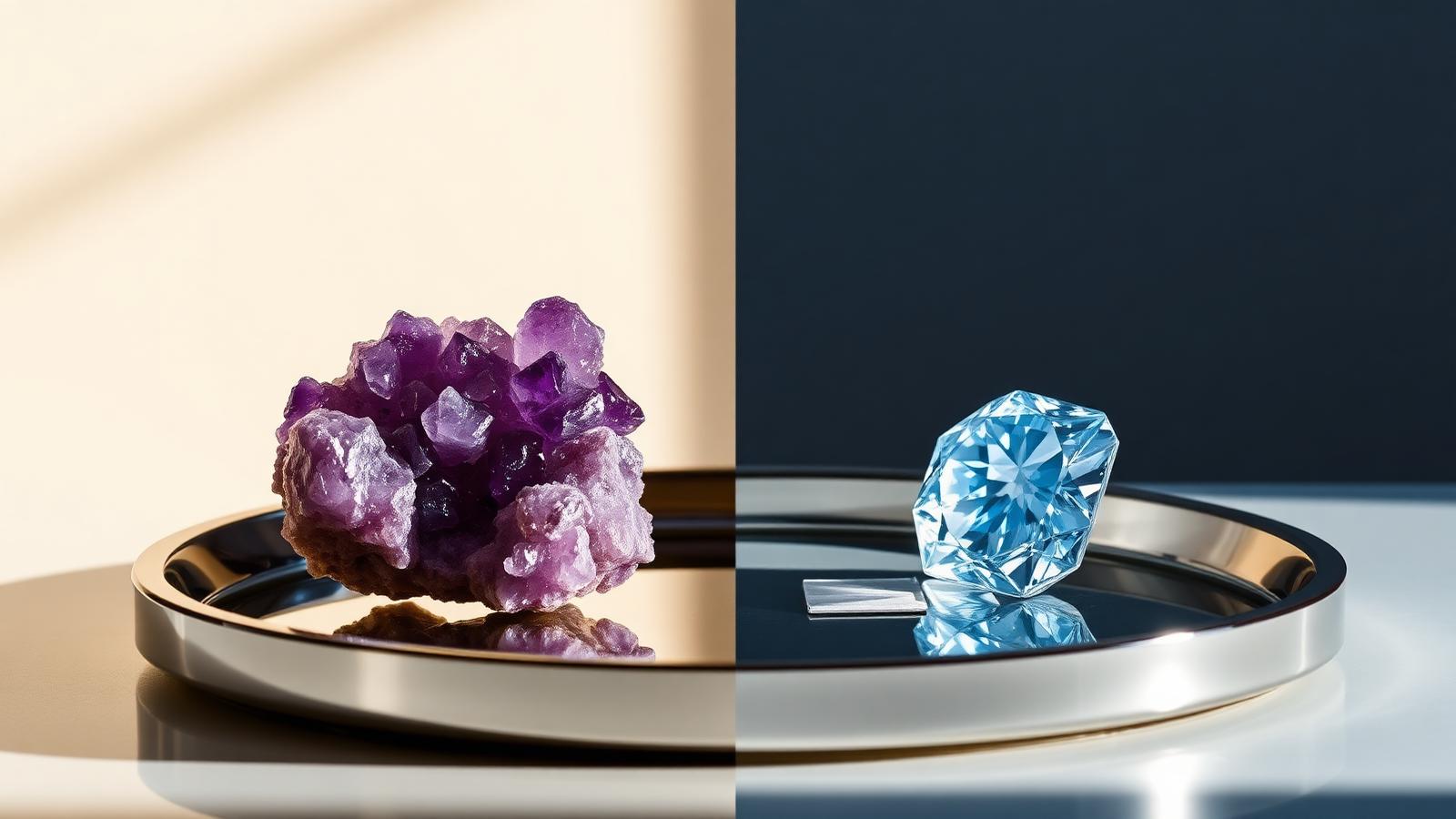
For most of the last century, a diamond was shorthand for authenticity. That shorthand is unravelling. Laboratories can now grow diamonds by the kilo, in weeks, indistinguishable to the naked eye from stones formed over a billion years. The technology is remarkable — and it has done something quiet and permanent to how the market feels about the stone.
Diamonds carry a new question now: is this one real, or is it a very good copy? Even natural diamond owners find themselves explaining. Value has drifted, and with it, meaning.
Semi-precious stones sit outside that story. An aquamarine, a tourmaline, a piece of mtorolite cannot be grown in a machine at scale — they are the product of specific geology, specific place, specific time. Each one is a single object with a single history. The market for them is smaller, slower, and, increasingly, the honest one.
We hear this from clients directly. People come to us wanting a stone that will still mean the same thing in twenty years — one that cannot be replicated, that carries its origin openly. That is not nostalgia. It is a very modern instinct about what "real" is worth.
Semi-precious is no longer a step down from precious. It is a step toward authenticity.