
Origins
Zimbabwe, quietly cut: a source of exquisite semi-precious stones
4 June 2026
From the Great Dyke to the granite hills of Mashonaland, Zimbabwe holds one of the most varied and least loud gemstone landscapes in the world.
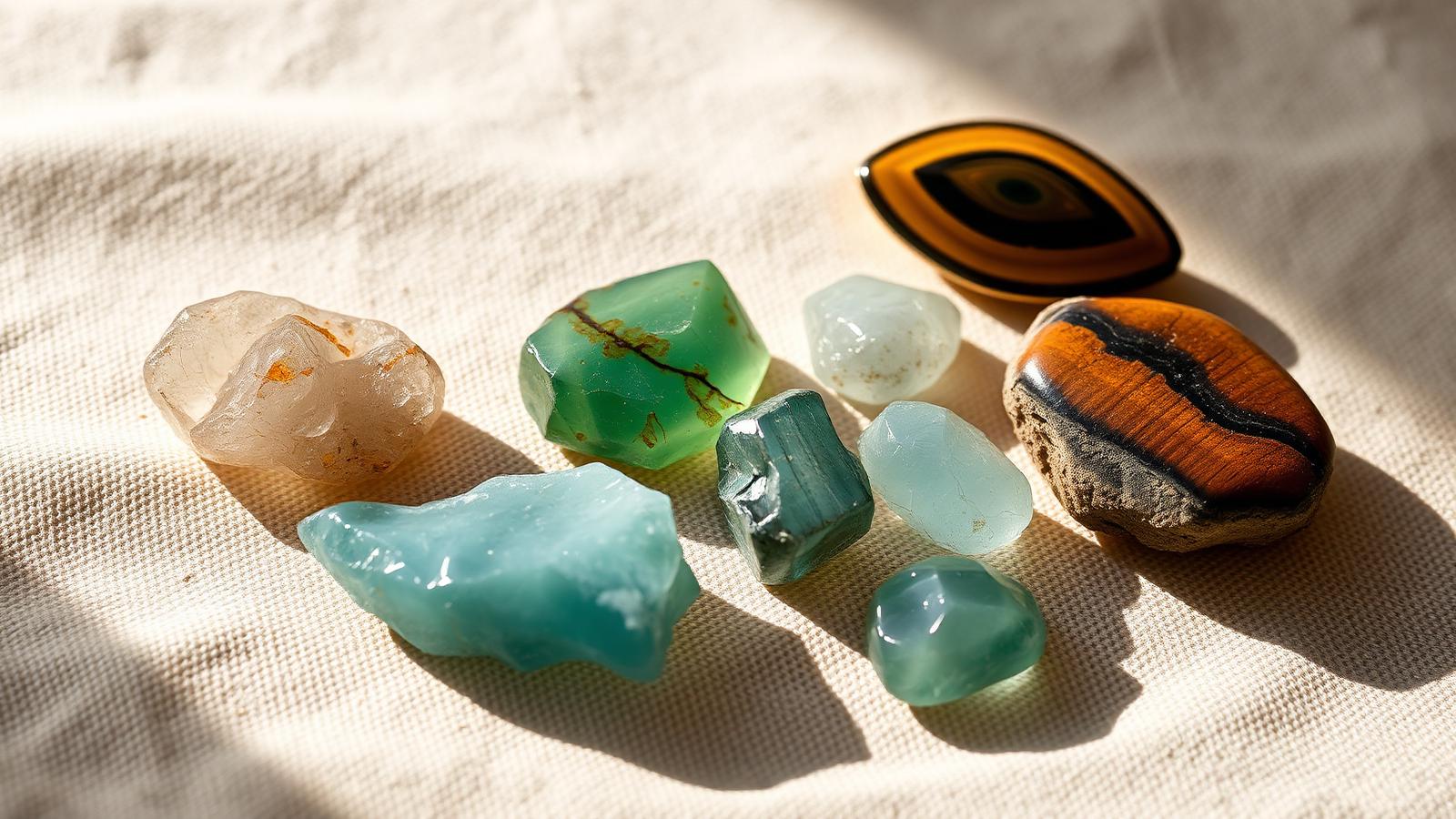
There is a particular kind of stone that only Zimbabwe seems to produce — cut slowly by geology, and quietly by hand. The Great Dyke, a 550-kilometre spine of ancient rock running down the country, is one of the oldest layered intrusions on the planet. It has yielded mtorolite, a green chrome chalcedony found almost nowhere else, alongside emerald, chrysoprase and prasiolite.
Further south, aquamarine and tourmaline emerge from the granite pegmatites near Karoi and Mutoko. In the Nyanga highlands, tiger eye and garnet are lifted out of small artisanal workings the way they have been for generations — by hand, in daylight, one stone at a time.
What sets Zimbabwean stones apart is not scarcity alone. It is the character of the sources: small, deliberate, and traceable. A stone in a VEZA piece can usually be walked back to the person who lifted it out of the ground.
We work with a shortlist of miners and cutters we know by name. Every parcel is examined stone by stone — colour, clarity, cut, and the story of where it came from. Nothing is bought blind, and nothing is bought in bulk. It is a slower way to source, and it is the only way that makes sense to us.
Zimbabwe is a country of quiet material wealth. Our work is simply to hold it well.